t3n: Empathetic products in the age of AI

Summary
The world of design is undergoing radical change: artificial intelligence is taking on more and more tasks that were previously firmly in the hands of UX designers – from developing ideas to generating compelling texts. In light of this rapid automation, the key question arises: what is our unique human contribution?
The answer lies in empathy—the ability to truly understand other people's feelings, thoughts, and perspectives. AI may be able to imitate empathy, but it lacks genuine experience. It cannot feel. However, it is precisely this deep, human compassion that is the powerful tool for designs that touch people emotionally and remain in their memories. After all, we develop interfaces for people with desires and uncertainties, not for machines.
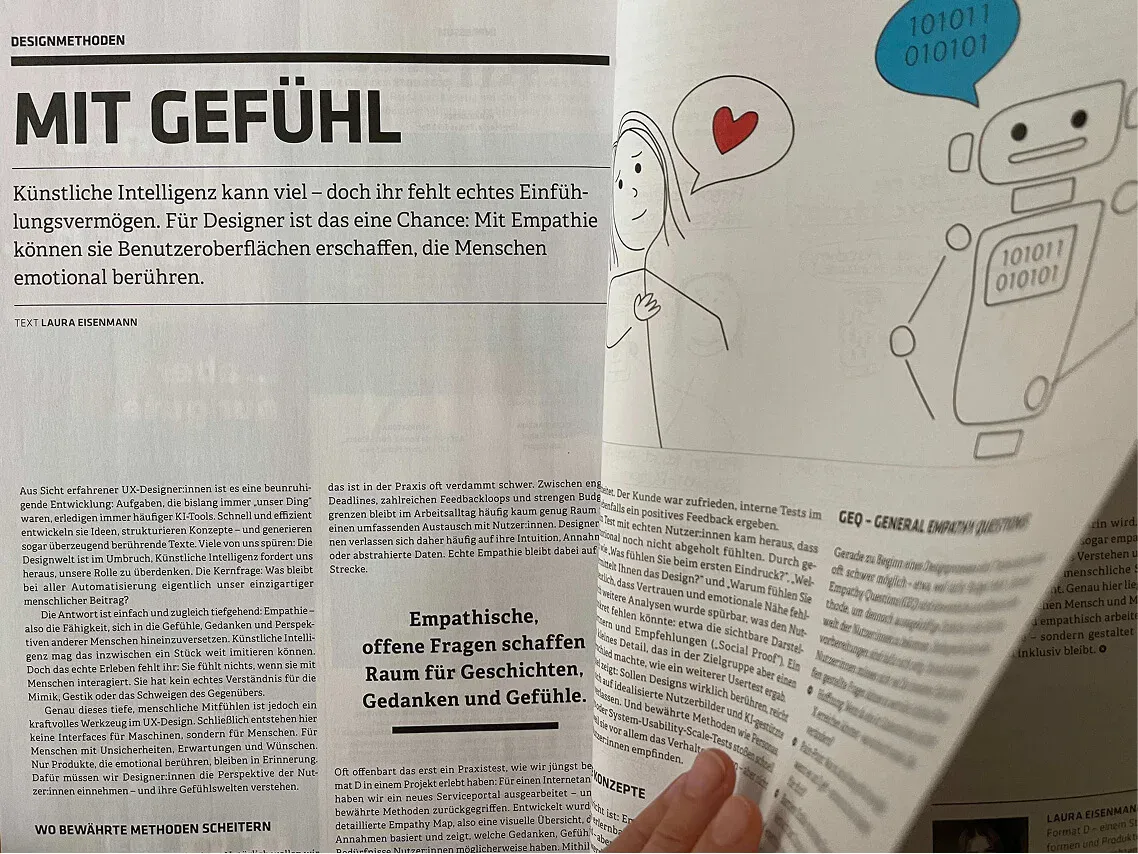
Between deadlines and budget constraints, designers often rely on intuition, abstract data, or proven methods such as empathy maps based on assumptions. But practice shows that even well-designed, internally acclaimed portals can be ineffective if they lack emotional proximity.
If designs are to truly touch people, it is not enough to rely on idealized user images and AI-supported analyses. Even standard methods such as personas or user journeys reach their limits when it comes to genuine empathetic understanding. What users do is important, but what they feel while doing it is just as crucial.
The good news is that empathy is not an innate superpower, but rather something that can be learned and does not necessarily require a great deal of additional effort. All it takes is new, effective tools in your toolbox to gain authentic insights into the reasons behind behavior.
The path to user-centered and emotionally effective products leads through a deeper understanding of human emotions.
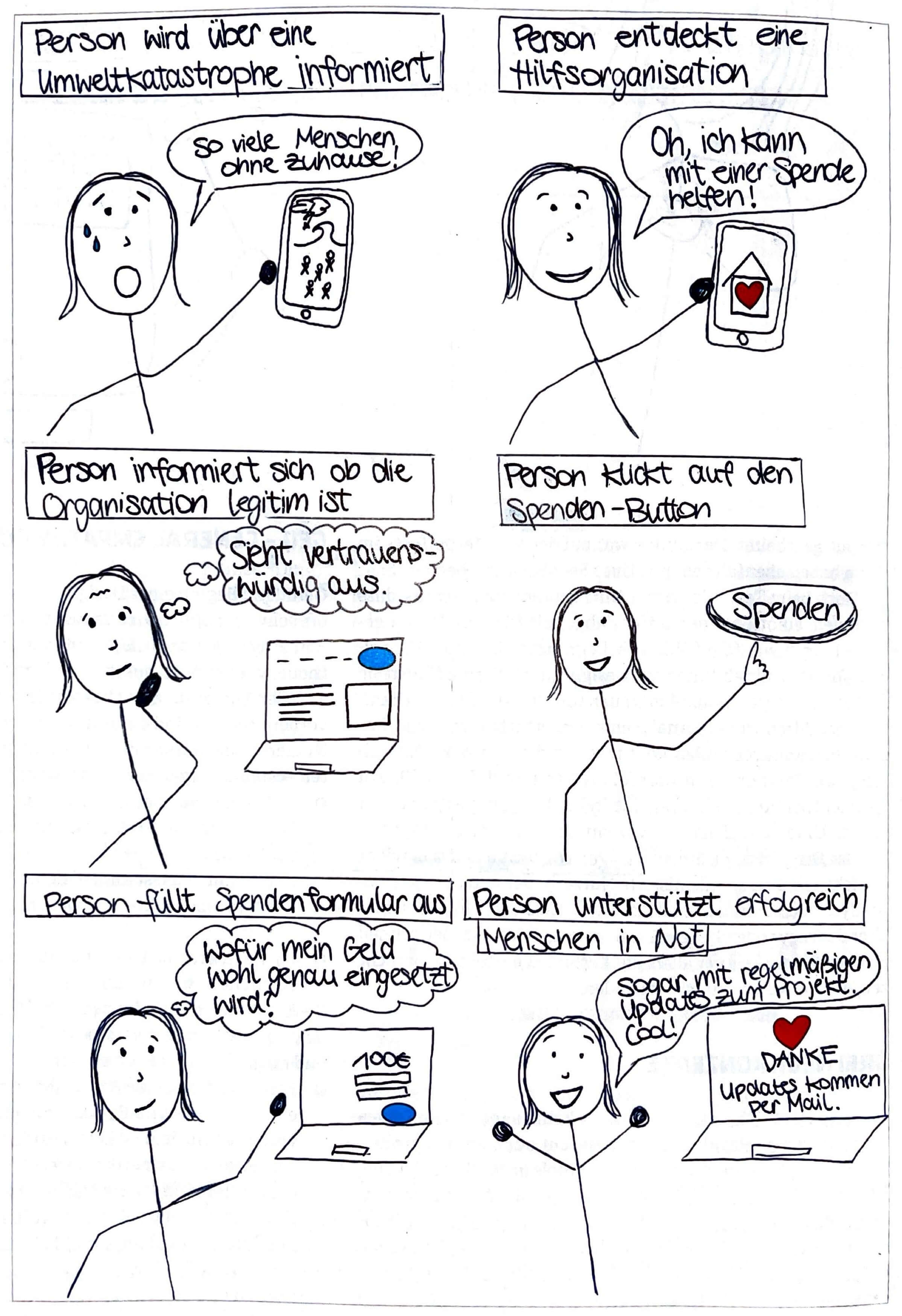
In this article, learn about three new methods that can achieve a big impact with manageable effort to create genuine understanding—from general empathy questions to visualizing the user experience as a comic strip.
The 6-panel story method is intended to help designers empathize with the emotional world of users when drawing comics.