First the lock, then the key: How we validate projects before we build them

10/2026
5 minutes reading time
Summary
That works well as long as the assumptions behind the solution hold up. If they don’t, the sprint turns into a marathon full of detours. With AI projects, this can be put into numbers: a RAND Corporation study notes that, by some estimates, more than 80 percent of AI projects fail. That’s twice the failure rate of IT projects that don’t involve AI. Well-known studies define “failure” in different ways, though, so the figure is an order of magnitude rather than an exact value. What stands out is the cause. The experts interviewed list five main reasons, and the first is that stakeholders misunderstand, or fail to clearly communicate, what problem needs to be solved.
This is exactly where FACTS comes in, Format D’s thinking framework. It’s built around five perspectives and separates what is proven about a project, what is so far only assumed, and what should be clarified next, before the big budget is spent. It all starts with a conversation. Market research and feasibility studies remain part of the process where needed, and FACTS shows where they’re needed.

Backing up gut feeling with evidence
Many people are familiar with IDEO’s classic approach:
- Desirability (Do people want it?)
- Viability (Does it pay off?)
Feasibility (Can it be built?)
It looks at a product from three angles and has proven itself in practice. Inside a company, though, more questions come up that it doesn’t cover. For example: who decides when two departments disagree, and who runs the solution once the project team has moved on? A solution can be built by an external partner (feasibility) and still be impossible to run internally.
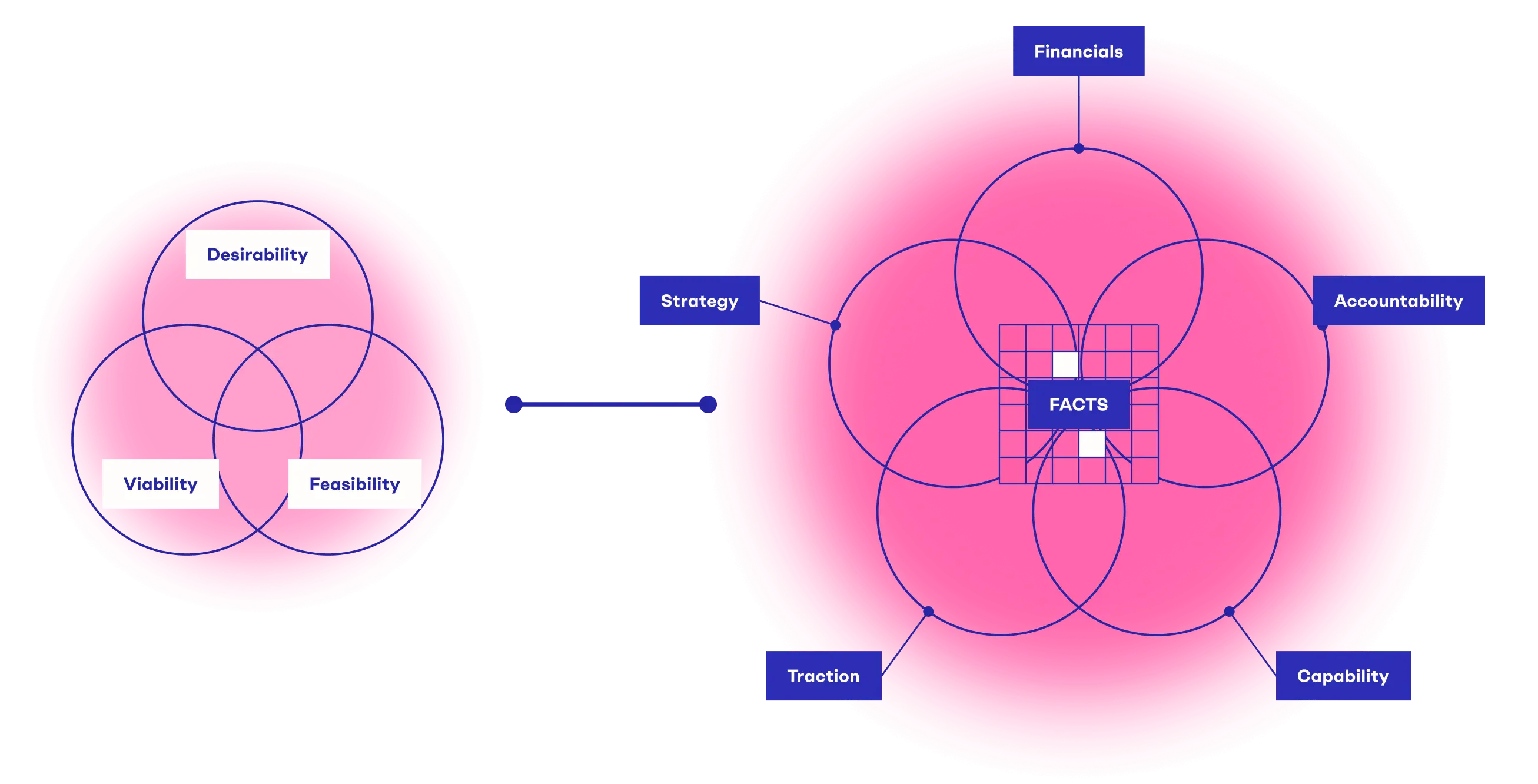
FACTS widens the view to five interlocking perspectives. For each one, we ask the same three questions:
- What would need to be true here for the project to succeed?
- Which of these points are proven, and which are still assumptions?
- What is the most useful next step?
The second question is the most uncomfortable, because it also tests statements that have long been treated as settled within the company. This makes it possible to back up the gut feeling that almost every project starts with using evidence.
The five perspectives at a glance:
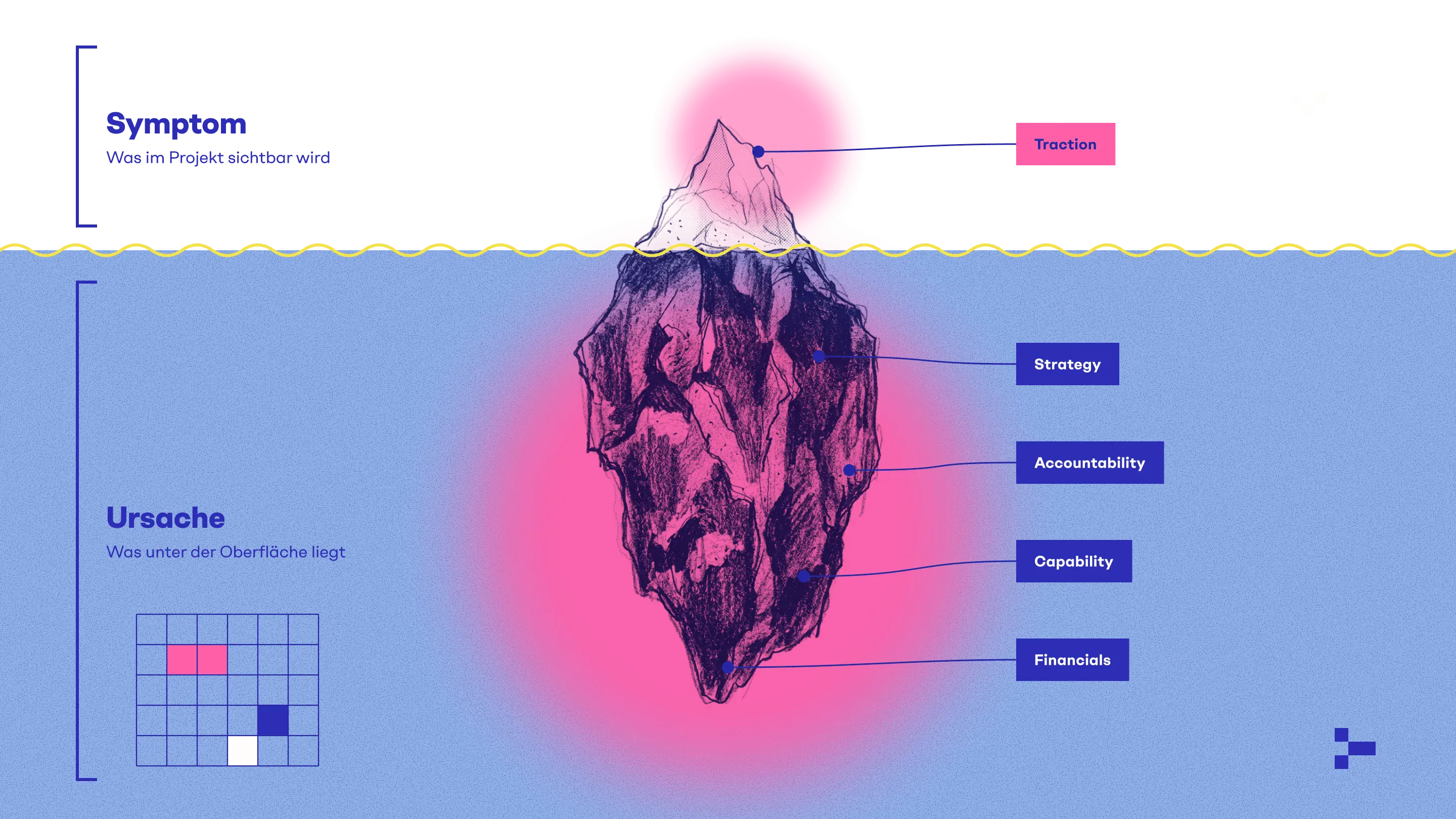
Symptom or cause?
Why the perspectives are interlinked
The five perspectives don’t stand on their own. They influence one another, which is why it pays to look at all five: doing so shows where the project logic is actually stuck.
A problem usually becomes visible where someone feels it, and that is in day-to-day use. If nobody uses the product, that’s a traction problem and only the tip of the iceberg. The cause often lies deeper: the wrong problem was solved (Strategy), nobody had the mandate to make decisions (Accountability), the team could build the solution but not run it (Capability), or the value proposition was never properly calculated (Financials).
The main causes identified in the RAND study also include a misunderstood problem, a lack of data and inadequate infrastructure. Meanwhile, the tip of the iceberg gets a new button and a redesigned onboarding flow.
That’s why we don’t use scoring systems. Five individual numbers would hide how the perspectives are connected. Instead, we work with you and your team to clarify what is proven and what is still open, before a lot of money flows in the wrong direction.
“The biggest mistake in the early stages of a project isn’t a lack of technical know-how. It’s the illusion that you already know exactly what the solution is. Taking an honest look at what really needs to be in place keeps you from putting a lot of effort into perfectly solving the wrong problem.”
No two projects are alike: context is key
The perspectives stay the same, but what we focus on depends on the project. Something that makes all the difference for a website may barely matter for an internal tool.
Here are four examples, each focusing on a different perspective:
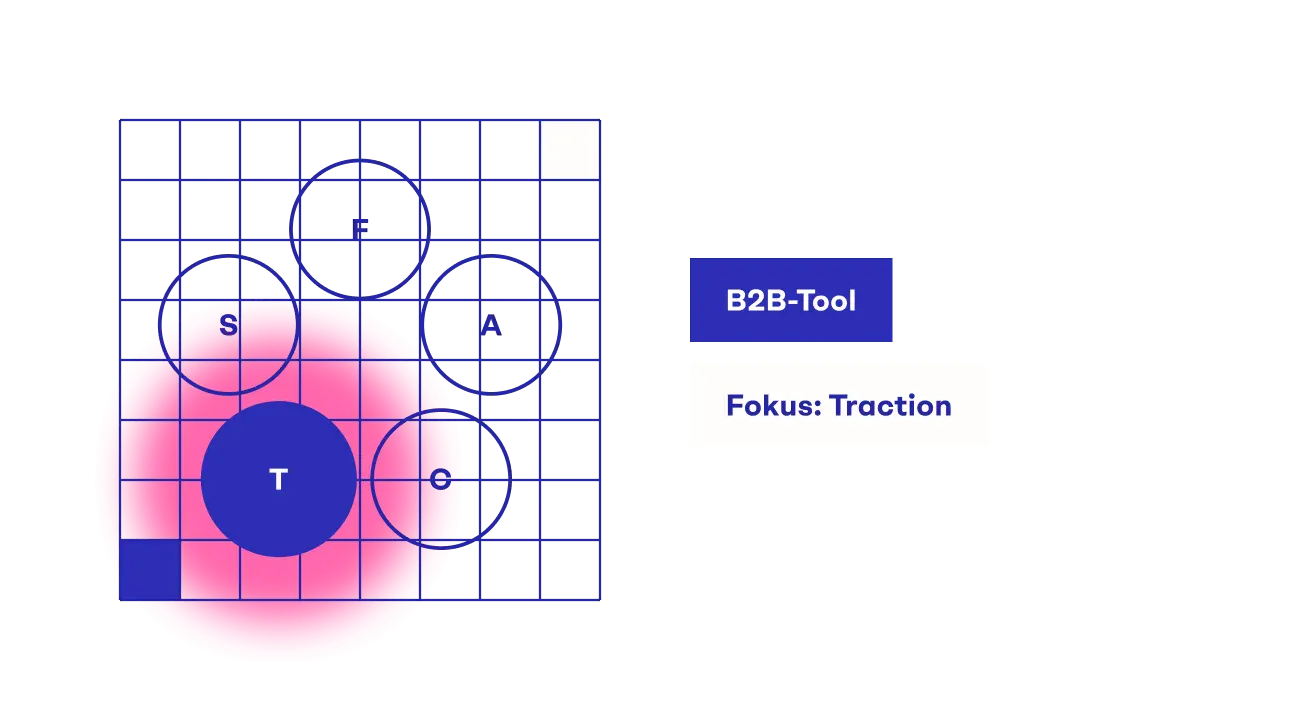
For a B2B tool, the focus under Traction is less on mass appeal. What matters more is how well the tool fits into existing workflows, the barriers to switching, and access to sales channels.
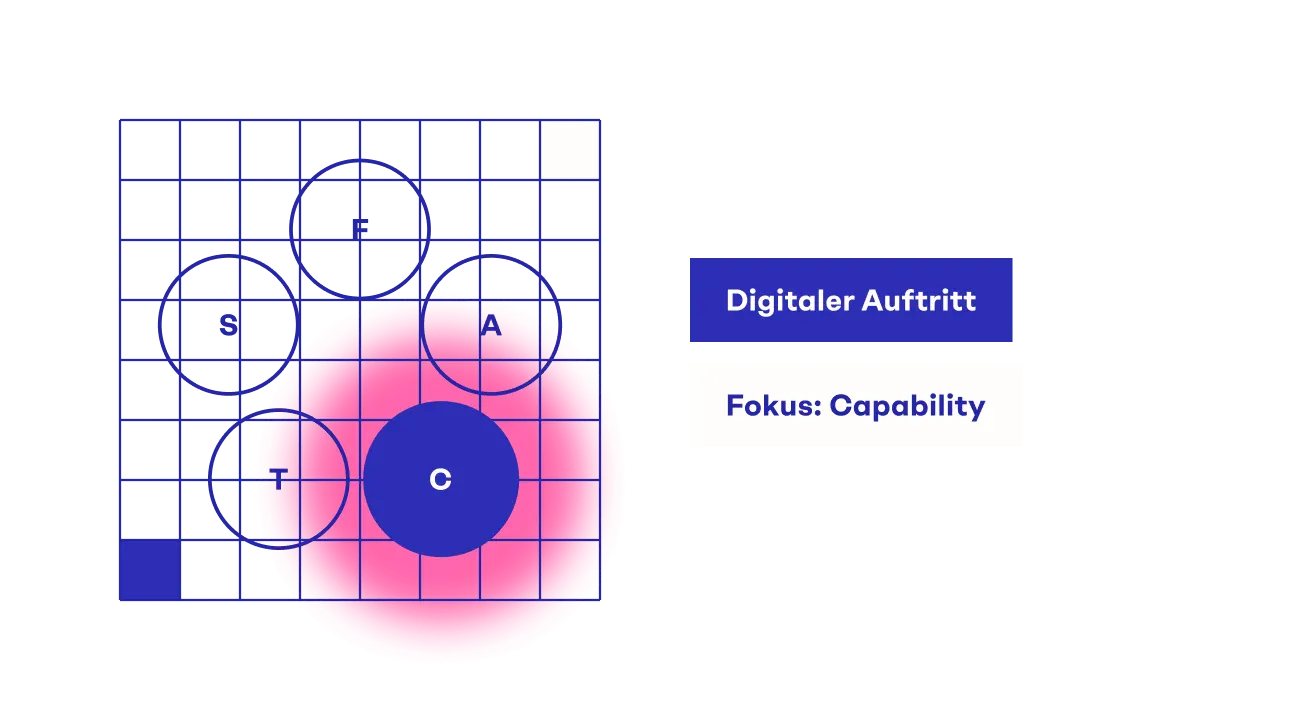
For a digital presence such as a website, Capability is mainly about content creation, ongoing editorial upkeep and SEO/analytics. Once the systems are in place, the team also needs to be able to actively run them.
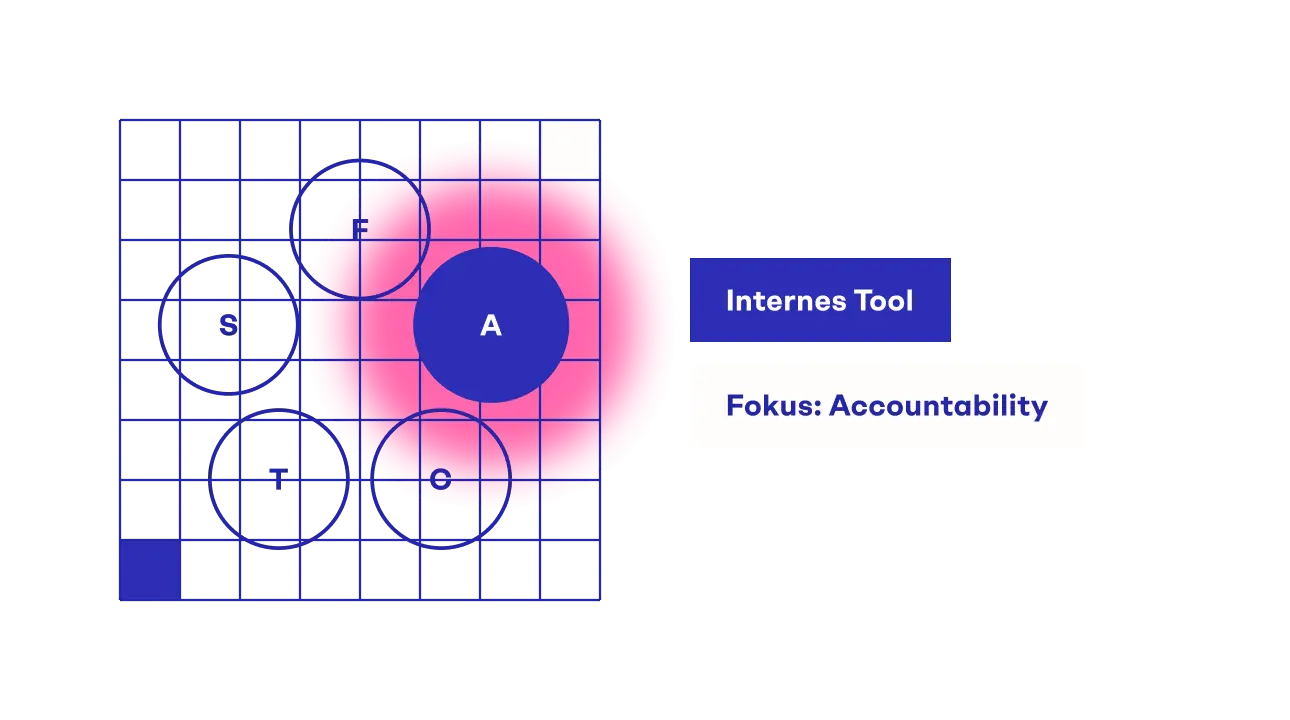
For an internal tool, Accountability often centers on having a clear mandate with the business departments, internal IT and, where applicable, the works council. The more people involved, the more important it becomes to know who makes the final call.
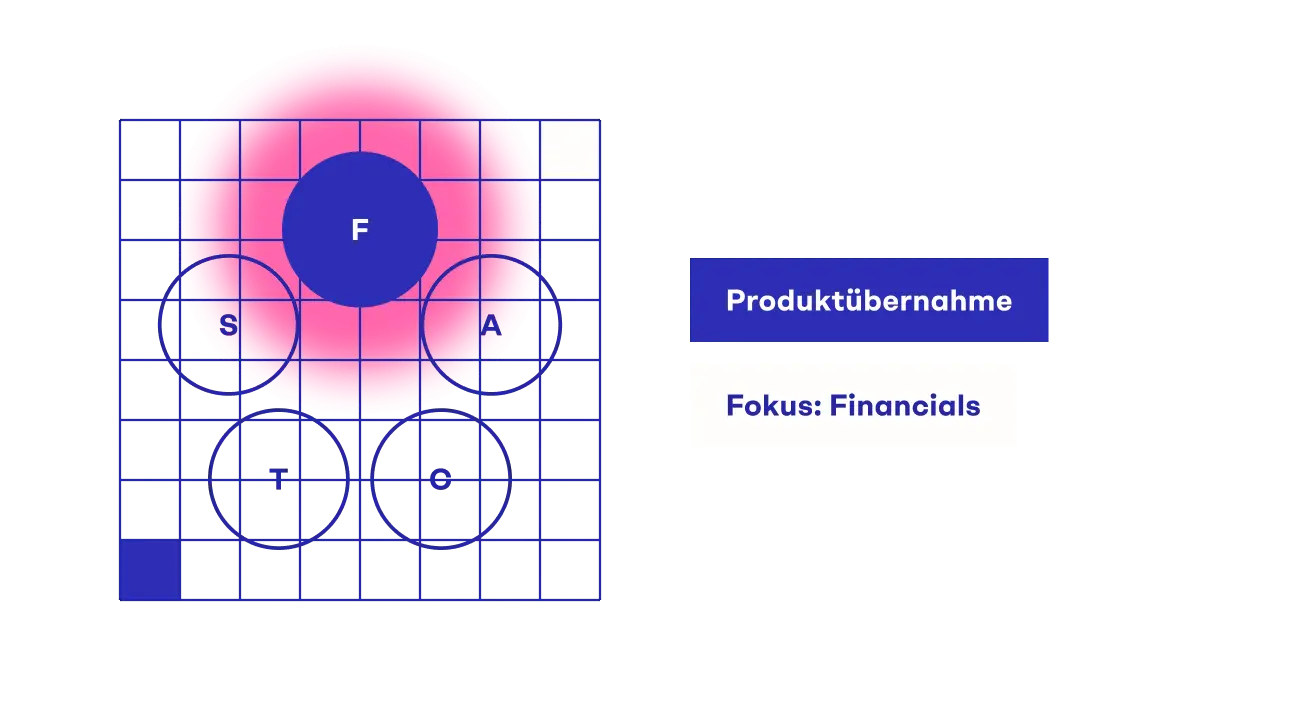
When taking over an existing product, we look at technical debt and how the product’s value is expected to develop under Financials. This shows how much investment is really needed.
The outcome of the diagnosis:
Not a blanket verdict, but a way forward
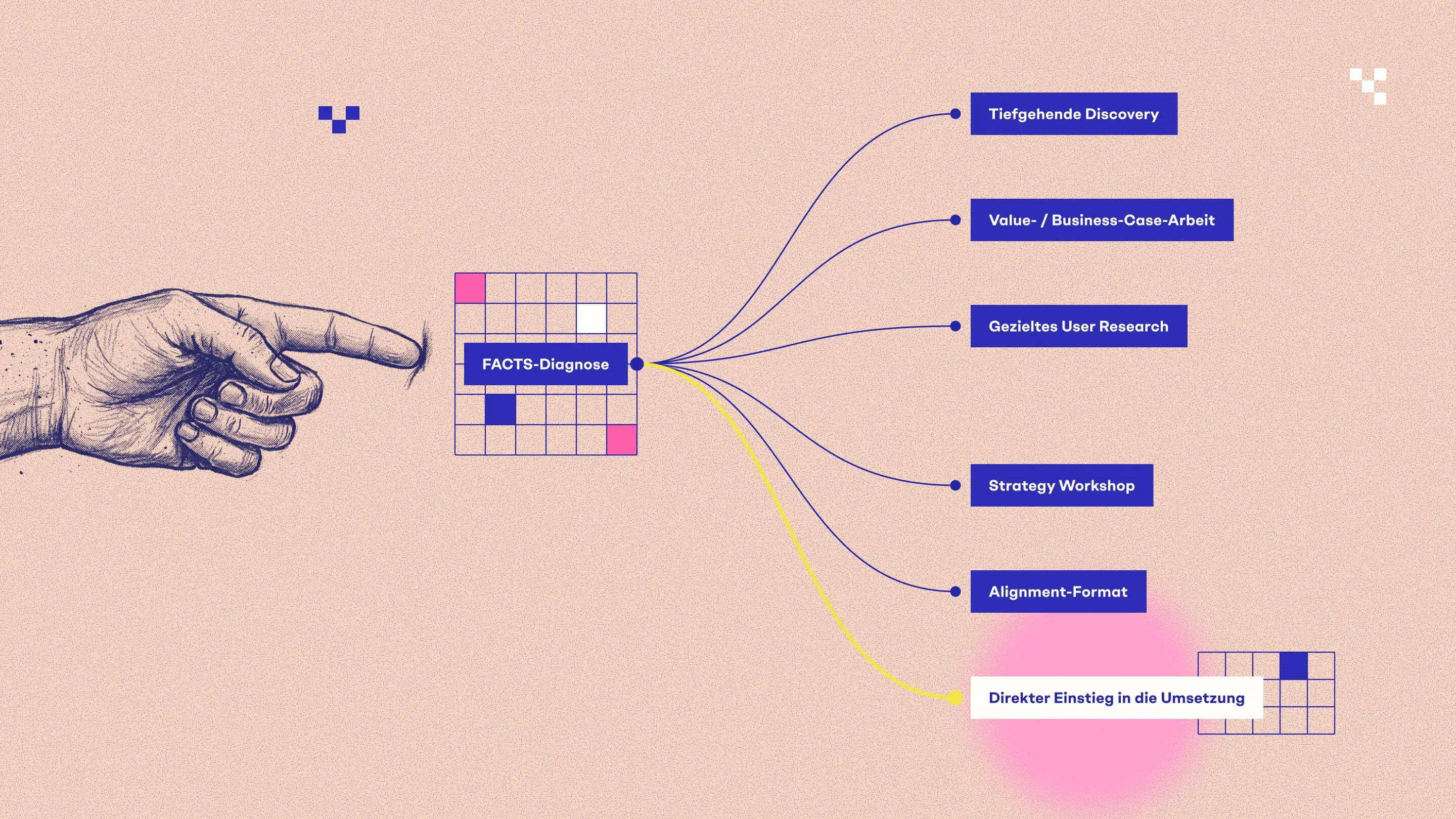
A FACTS diagnosis ends with a well-founded recommendation on how we can get started with you and your team in a meaningful way. It connects the initial project request with the actual uncertainties and the right approach. The cards below show what this can look like. We only invest in the big solution once the critical assumptions have been cleared up, and we keep the effort needed to clear them up to a minimum.
You can try FACTS out right away on a project that’s currently on your desk. Go through the three questions for each of the five perspectives, and for every answer, note whether it’s “We know this” or “We’re assuming this.”
If you’d rather do this together, get in touch! In a FACTS conversation, we’ll go through the five perspectives with you and show you what the most useful next step is.
...lead to a Strategy Workshop.
...lead to an alignment session.
...allow you to move straight into concept and delivery.
...leads to targeted user research.
...lead to an in-depth discovery phase.
...leads to a value or business case assessment.