The “Das Beste des Tages” App with Hotel Matze: The Story Behind It


10/2026
10 Minuten reading time
Summary
Here’s the story behind it
How it all began … It actually all started eight years ago. Back then, Matze and Philip had the idea of creating a simple Excel spreadsheet. In one column, Matze would enter his personal highlight of the day, and in the other, Philip would do the same. At some point, the two of them began regularly talking about this little ritual in their monthly podcast episode, ‘Hotel Matze Check-In with Philip Siefer’. They used it as a starting point for conversations or simply mentioned it from time to time. They christened the whole thing ‘The Best of the Day’.
Lisa, a UX/UI designer at Format D who, amongst other things, serves as a shared lead for the culture division, is passionate about reading specialist literature on psychology, habits and organisational culture in her spare time. Naturally, Matze and Philip’s monthly check-in is one of her all-time favourite podcasts, which is why she has been following the insights from “Das Beste des Tages” right from the start. When Lisa set off on a six-month round-the-world trip in 2024, she asked Alina if she’d fancy trying out this ritual in her own life. Alina, who works as a strategy consultant at Format D and studied business psychology, was immediately enthusiastic. So the two of them started their own Excel spreadsheet. But after half a year, the whole thing became increasingly confusing. How Matze and Philip managed to keep it up for eight years remains a mystery to us to this day… One evening, the decisive thought finally struck: at Format D, we develop digital products for others every day. Why don’t we simply turn this idea into our own app?
There were two reasons behind this. On the one hand, we wanted to put an end to the chaos in our own spreadsheets. On the other hand, Alina and Lisa had experienced first-hand just how good this little ritual of gratitude made them feel. After all, it’s just a single sentence a day. But sharing precisely that sentence with another person makes a noticeable difference. Through positive psychology, both were familiar with the scientific findings of gratitude research and knew about the positive effects on wellbeing and resilience. In their day-to-day lives, they also discovered how close they’d remained through this honest exchange and how it helped build a genuine connection. In the age of social media, when it’s easier than ever to stay connected, genuine and deep connections are becoming increasingly rare. Studies reveal the worrying fact that around one in five adults in Germany feels very lonely. According to a study by the Federal Institute for Population Research, this figure rises to as high as 34 per cent among 18- to 29-year-olds. So is it really about the quantity of contacts, or rather their quality? With the aim of creating a safe space for genuine human connection, the idea for the app began to take on a more concrete form.
How do you pitch an app idea to Matze and Philip?
Once the idea was in place, the next step was to convince Matze and Philip and bring them on board as partners. So we wrote a short email to Matze: “Hey, we’ve recreated your spreadsheet and it’s been a massive help to us. Why don’t we work together to develop ‘Das Beste des Tages’ into an app?” Having already written off the chance of ever getting a reply, Matze and Philip responded the very next day: “Sure, let’s talk!”. Shortly afterwards, we met virtually for an initial get-together. We’d prepared a short presentation with some initial strategic ideas and design drafts. We were very nervous before the call. But all our fears vanished instantly when the two of them appeared on the screen. The chemistry was right from the very first second.
Even after that first meeting, it was clear that we wanted to tackle the project together. The roles were also quickly assigned. Format D is responsible for the design, development and day-to-day operation of the app, whilst Matze and Philip are using their reach and flair for storytelling to raise awareness of the product.
However, before we started developing it, we wanted to check whether there was actually a genuine need for such an app outside our own bubble.
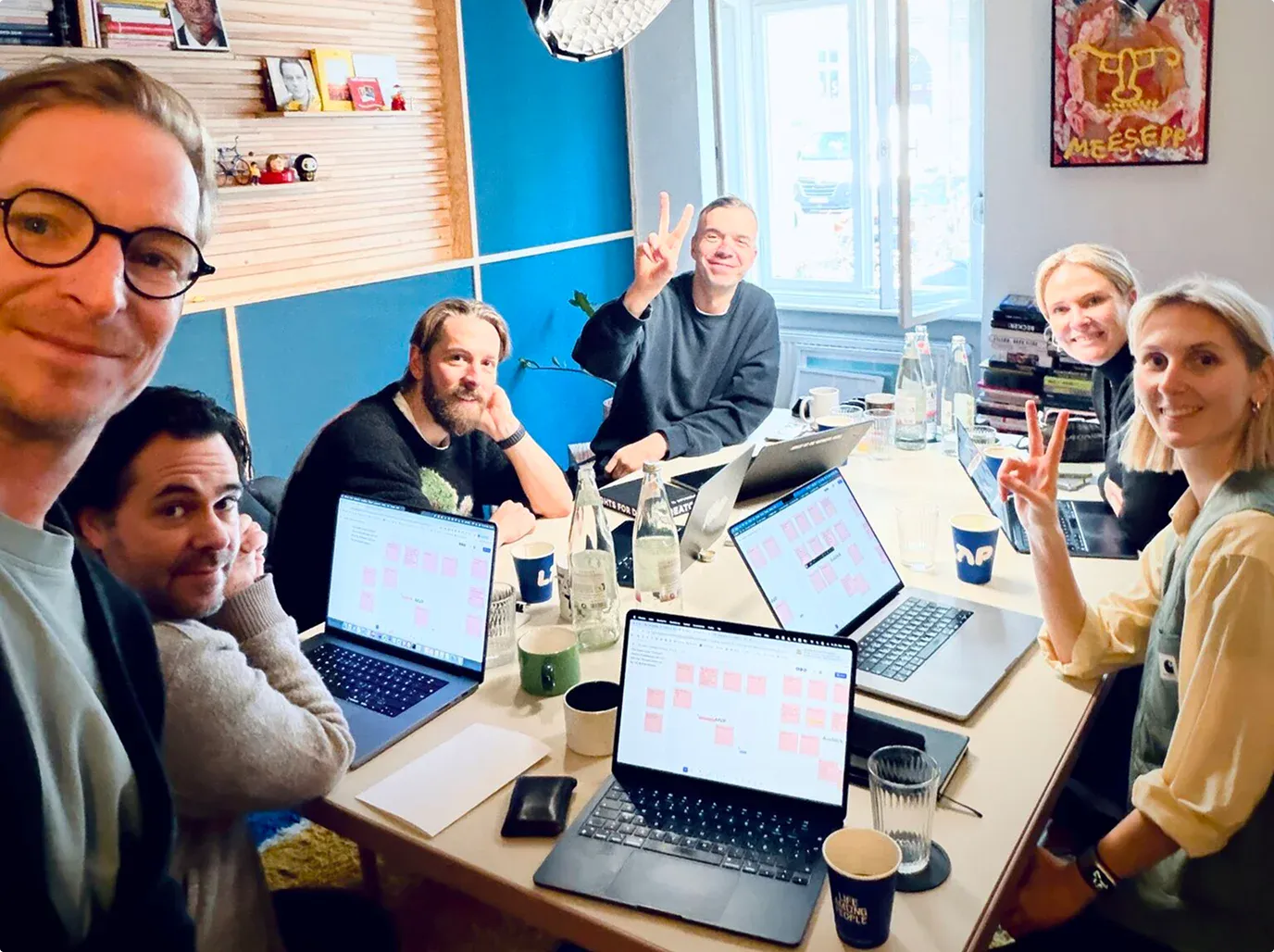
Joint workshop in Berlin
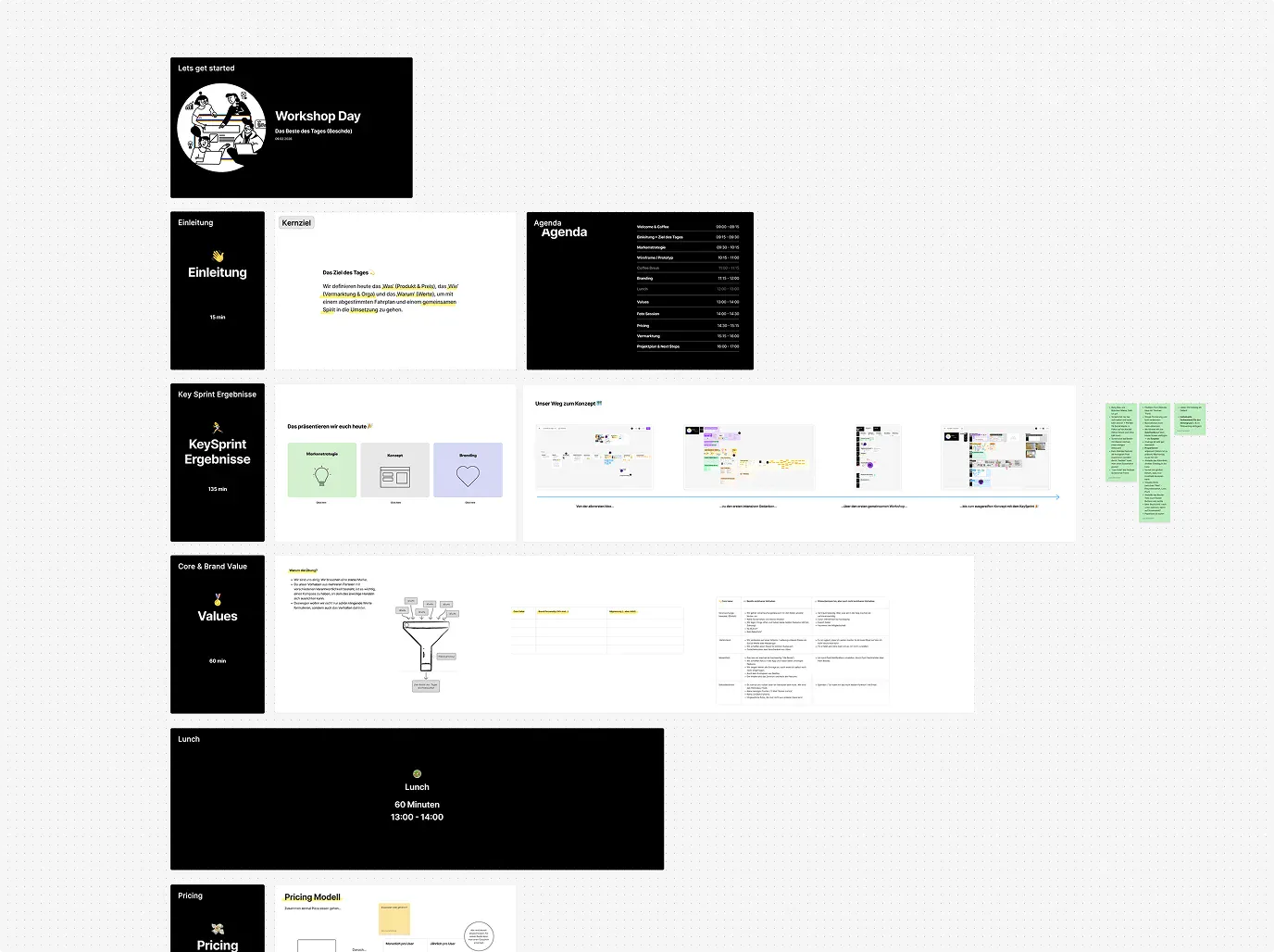
FigJam board for the workshop
The reality check: 18,000 people and the question of ‘Why?’
Before we at Format D write a single line of code or draw up any design concepts, we always ask ourselves the same fundamental question: Is this just a nice idea we’ve come up with, or is there a genuine need for it out there?
Although we had a good gut feeling and sound psychological arguments, we wanted reliable feedback. That’s why we made use of Matze’s close-knit community and launched a survey amongst the roughly 18,000 subscribers to his newsletter. We wanted to know whether people longed for a peaceful, digital space reserved exclusively for them and just one other person.
The response was overwhelming and gave us the reassurance we needed. The feedback clearly showed just how fed up many people are with the constant clamour of traditional social media platforms. People want to slow down, have privacy and use tools that are good for their mental health, rather than creating pressure through comparisons. Encouraged by this clear feedback, we set about developing the actual product concept.
Under the bonnet: a flexible tech stack and the highest level of security
A focused set of features by no means implies that we can compromise on the technical foundations – quite the opposite. Precisely because we wanted to create a novel user experience, we had to be able to respond flexibly to the experiences of our first users.
We opted for a modern and adaptable technical architecture that allowed us this flexibility. On the one hand, the system had to be robust enough to cope with growing user numbers without any problems; on the other hand, it had to be simple enough to allow adjustments to be implemented swiftly following the initial test phases. Data security was equally crucial for us right from the start. As the app provides a secure space for very personal moments, data protection and hosting the service on servers in Germany were our top priorities.
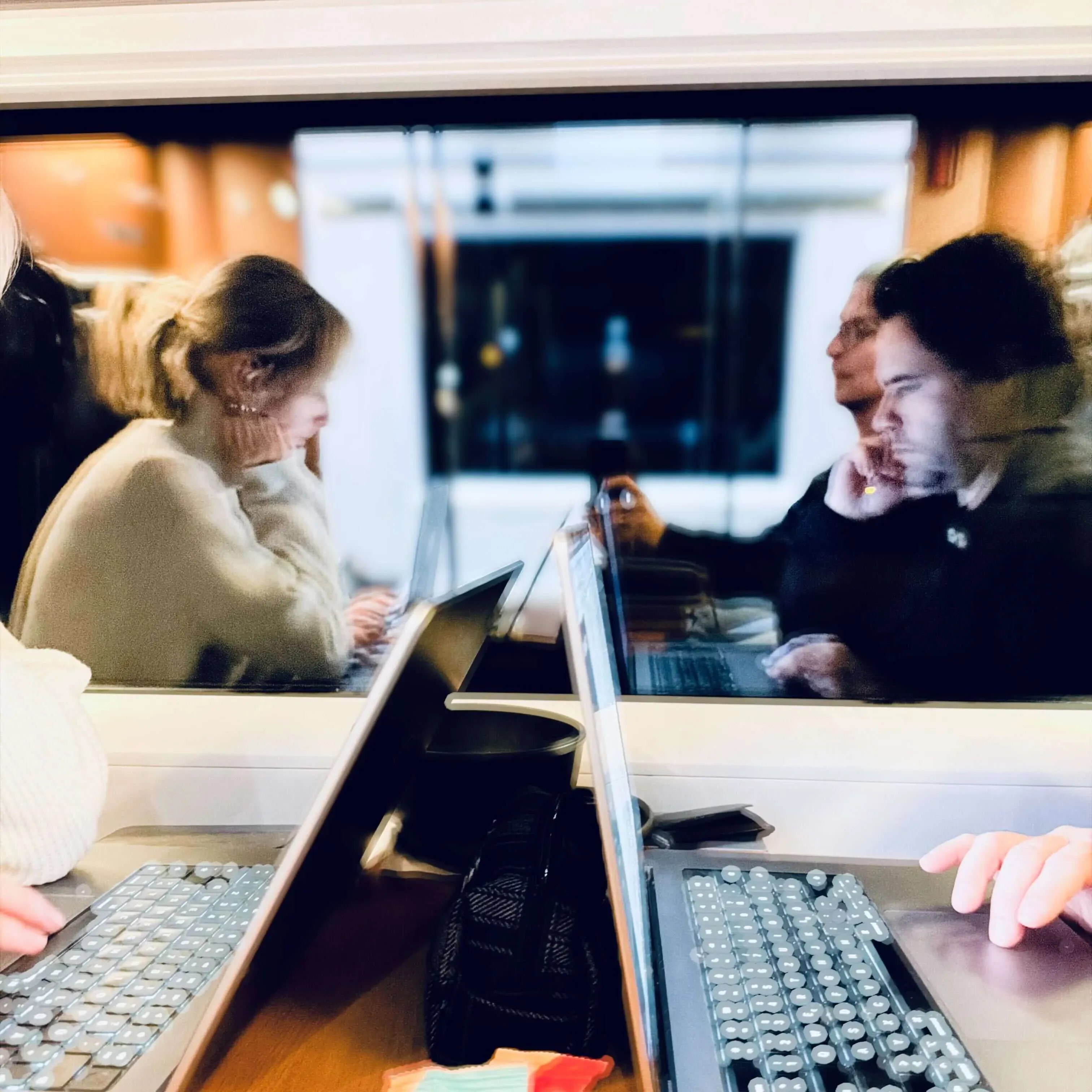
The monetisation dilemma: a pizza night to celebrate friendship
One of the most intriguing questions concerned the business model: how do you finance a digital product fairly when its aim is precisely not to keep users in front of the screen for as long as possible?
Most standard apps tend to prioritise maximum usage time in order to display adverts or analyse data. Neither of these options was acceptable to us. Adverts would instantly disrupt the peaceful atmosphere, and selling personal everyday experiences is fundamentally at odds with our values.
We had to develop an ethical monetisation model. The answer was a transparent subscription, which we reimagined conceptually: not as an annoying ‘paywall’, but as a conscious investment in an important friendship. Right from the start, the idea was that it should cost no more than the equivalent of going out for a pizza together once. To prevent payment barriers from standing between two friends, we developed a specially designed voucher system (‘Smart Gifting’). As a user, I can take out a subscription for myself, but I also have the option to invite my bestie using a generated voucher. This way, we create the opportunity for it to be both a lovely gift and a conscious, joint decision to enjoy ‘Das Beste des Tages’. With this model, we can offer the app in a fair, transparent and completely ad-free way.
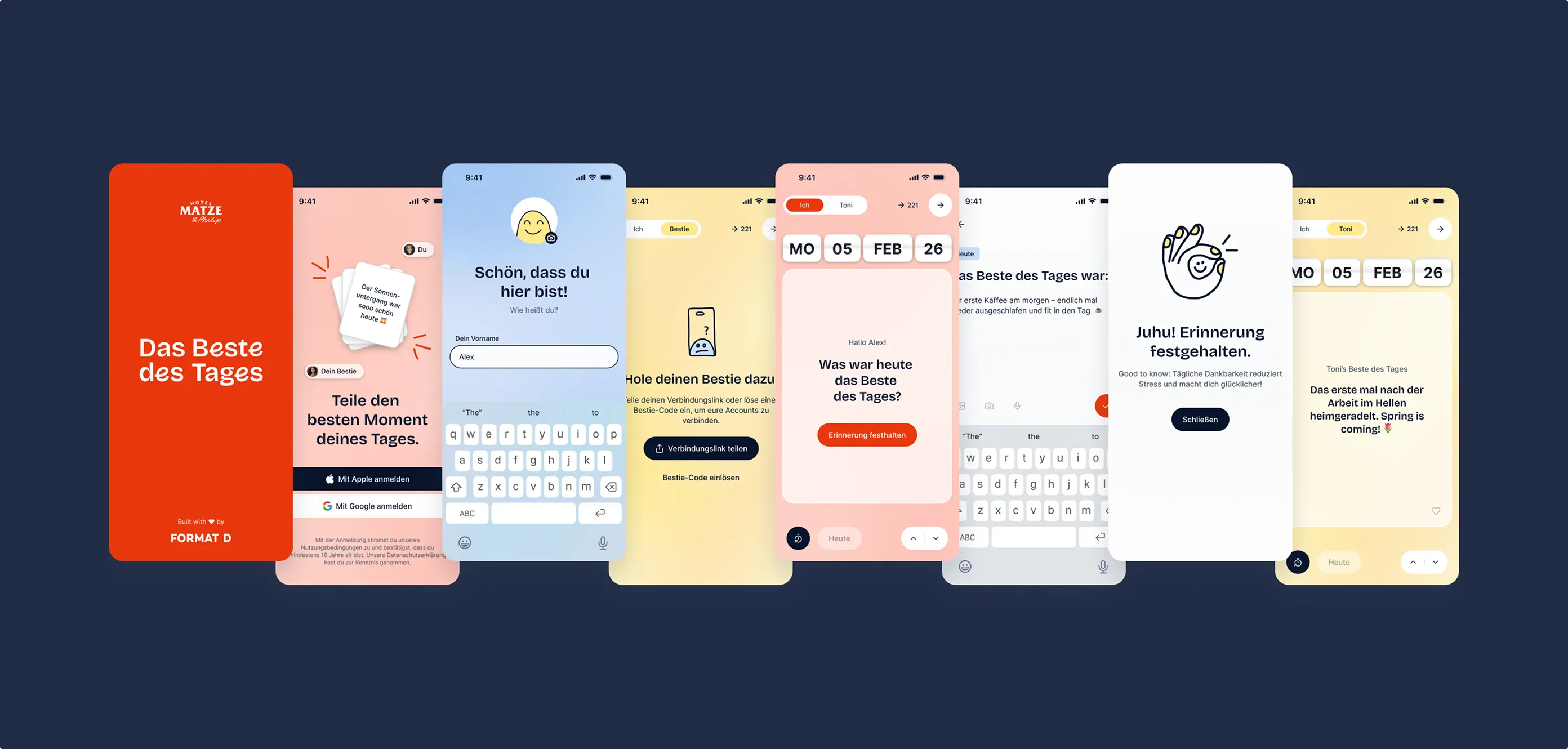
8 of over 100 screens from the Figma prototype
The final bosses: Apple, Google and bureaucracy
Anyone who develops digital products knows that finishing the coding of an app is often only half the battle. The other half is getting it successfully past the gatekeepers of the internet.
Our model in particular – with the voucher code for the second person – did not fit easily into the standard frameworks set by the platform operators. For us, this meant intensive coordination, reviewing guidelines and making detailed enquiries during the approval processes. Through extensive research and the targeted use of AI, we were eventually able to overcome these administrative hurdles step by step, without having to compromise on our original idea.
Putting the finishing touches to it: From the waiting list to the launch
Due to the huge response from the community, we set up a simple landing page at an early stage where interested parties could sign up for early access. By the time the app was launched, after just under nine months of development, over 2,600 people had already registered there.
Once the app was released in the app stores, we began a series of coordinated testing phases. Following a beta testing phase involving 30 people, on 1 October we invited the 2,600 loyal supporters on the waiting list to join the Early Access programme exclusively, gathered feedback and ensured that the onboarding process ran absolutely smoothly. This was followed on 18 October by the official public launch, accompanied by a strategic pitch package to Apple’s editorial team in the hope of securing coveted feature spots.
Conclusion: From project-based work to your own venture
Working in partnership with Matze and Philip was an enormous asset to our entire team. We were able to learn from one another and channel this shared energy directly into the product. Matze and Philip enriched the project from the very start with their ideas and enthusiasm.
For us as a digital studio, this journey represented an important step in our development. We have gradually moved away from being purely a service provider towards creating our own digital product. Within just one year, we managed to get a standalone app off the ground – from the initial idea right through to its launch – encompassing all its organisational, technical and business aspects.
The result? “The Best of the Day” has become more than just an app. It proves that digital products don’t have to be loud, addictive or data-hungry to work. When technology meets psychology and genuine human needs, sometimes even the bare minimum is enough to create maximum value.